Tarikolot, West Java

Silat Cimande Asli Tarikolot

A living combat tradition from Tarikolot, West Java, transmitted through lineage, discipline, oath, and practice.

Silat Cimande Asli Tarikolot is a traditional Pencak Silat lineage from West Java. It is taught in the United Kingdom through the transmission of Master Abdur Rahman Blanchette, whose connection to the art comes through training in Tarikolot and authorisation from Bapak Firdaus.

This is not a modern martial arts brand, a fusion system, or a performance art. It is a source tradition, carried through teacher, village, correction, etiquette, and permission.

It is deep, ethical, and spiritually grounded, but also direct, practical, and highly effective as a close-range self-defence system.

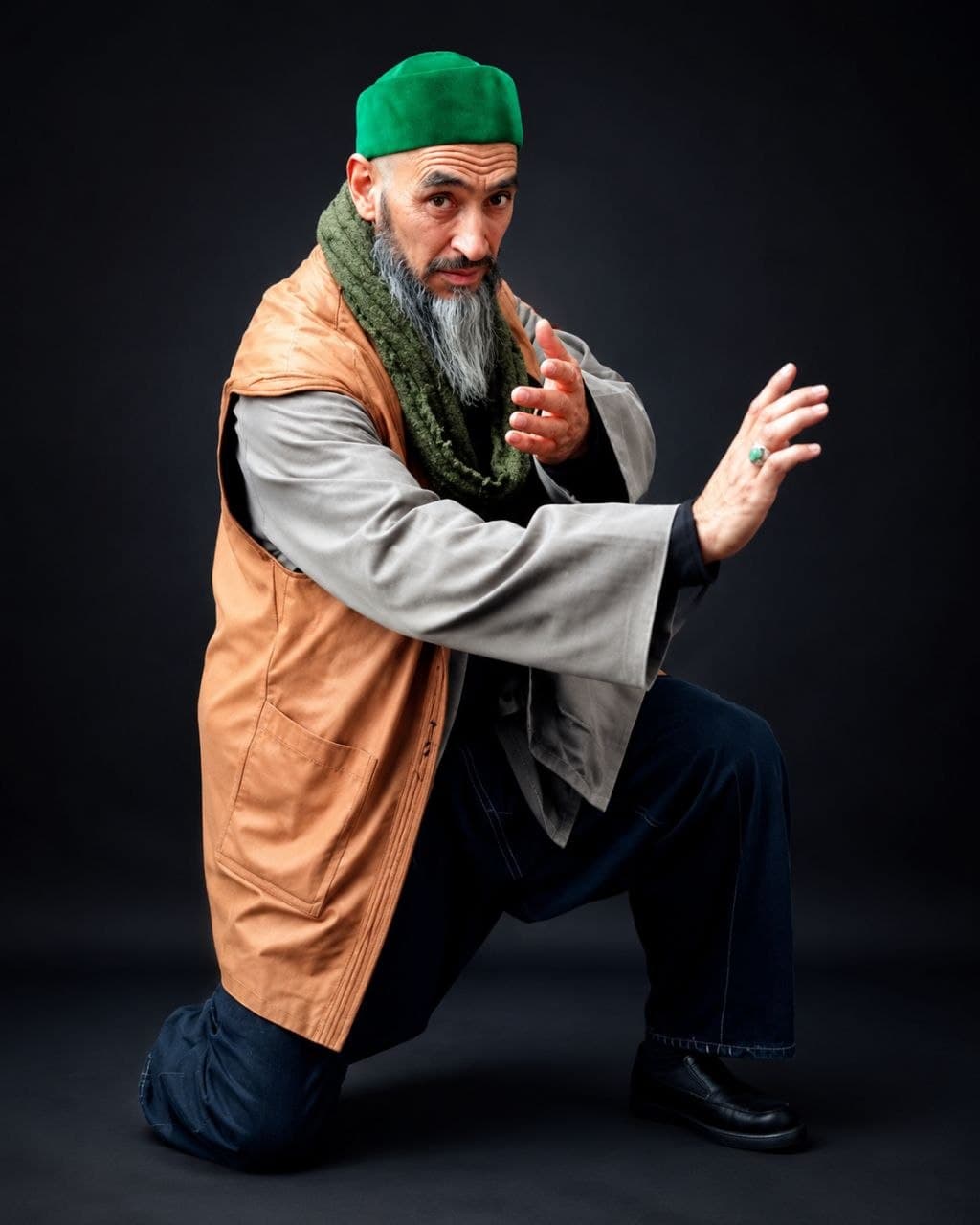
Master Abdur Rahman Blanchette demonstrating Silat Cimande Asli Tarikolot posture
Posture, balance, timing, and disciplined movement are developed through correction and sincere practice.
Silat Cimande Asli Tarikolot badge representing the Indonesia and United Kingdom lineage connection

A complete martial art

A Traditional Art With Real Combative Depth

Cimande is one of the great streams of Pencak Silat from West Java. It is not only heritage, movement, or cultural identity. It is a complete martial art with practical methods for self-defence, close-range control, angling, evasion, entries, striking, balance breaking, takedowns, and disciplined response.

The training can look subtle from the outside, but its purpose is direct. It teaches the practitioner how to move under pressure, protect the body, read distance, enter safely, disrupt structure, and act with judgement.

Traditional, but not decorative.
Deep, but practical.
Ethical, because the knowledge is serious.

Complete self-defence

Silat Cimande Asli Tarikolot is trained as a self-defence art, not as a display system. Its methods are designed for situations where distance closes quickly and the practitioner must use timing, structure, angle, and calm decision-making.

The art develops practical striking, hand position, footwork, evasion, limb control, off-balancing, takedowns, and awareness of weapons.

Close-range effectiveness

Cimande works at close range, where small errors matter. The practitioner learns to use body position, angle, contact, rhythm, and committed movement to create advantage.

The aim is not aggression. The aim is protection, control, and decisive action when needed.

Power with discipline

The physical methods of Cimande are serious, so the training is held inside an ethical framework. Skill is not separated from conduct. A student is expected to develop judgement, humility, care for training partners, and respect for the teacher, the art, and the wider community.

The wider inheritance

Why Tarikolot Matters

Tarikolot is not just a place name. It represents source, village transmission, teacher authority, etiquette, training culture, permission, and responsibility.

Silat Cimande Asli Tarikolot refers to the Tarikolot source of this inheritance. The name points to a living connection with West Java, not a modern label detached from place, teacher, and lineage.

To speak of Silat Cimande Asli Tarikolot is to speak of source, not imitation.

The art belongs to the wider cultural world of Pasundan, West Java. It is associated with Abah Khair, with the Cimande tradition, and with the teachers, families, villages, manners, and practice environments through which the art has been carried across generations.

Direct teacher-to-student transmission

The Lineage in the United Kingdom

The public teaching of Silat Cimande Asli Tarikolot in the United Kingdom is centred around Master Abdur Rahman Blanchette, also known as Nicholas Blanchette.

Master Abdur Rahman travelled to Tarikolot, in the Caringin district of Bogor, West Java, and trained within the village environment from which this lineage is drawn. There he studied under Bapak Firdaus and received authorisation to teach Silat Cimande Asli.

This connection is central. It means the art is not being presented as a personal invention, a commercial fusion, or an unauthorised interpretation.

It is a responsibility received through direct teacher-to-student transmission.

Practical self-defence

Built for Practical Self-Defence

Silat Cimande Asli Tarikolot is a traditional art, but it is not a museum piece. It was preserved because it has practical value.

The training develops skills that remain relevant to serious martial artists today:

  • Evasive movement
  • Entering safely
  • Striking with structure
  • Controlling limbs
  • Disrupting balance
  • Moving at close range
  • Sweeps and takedowns
  • Awareness of weapons
  • Calmness under pressure
  • Judgement and restraint

Modern combat sports are excellent for pressure, timing, fitness, resistance, and testing. Traditional Cimande offers a different layer: close-range tactics, weapons awareness, body structure, entries, limb control, and the ethics needed to govern serious martial knowledge.

For practitioners of Kali, JKD, BJJ, boxing, Muay Thai, traditional martial arts, or modern self-defence, Cimande offers a deep body of close-range knowledge that can enrich existing practice.

Training method

How the Art Trains the Body

Cimande is trained through correction, repetition, partner work, and careful attention to detail. The visible movement is only the outer layer. Over time, the student begins to understand structure, distance, timing, contact, intention, and character.

Jurus

The jurus train posture, structure, striking lines, coordination, evasion, rhythm, timing, and intent. They are not empty movements. They are a way of storing combative knowledge in the body. Through repetition and correction, the student learns how to align the body, organise the hands, protect the centre, and move with purpose.

Langkah

Langkah trains stepping, angling, balance, recovery, positioning, and the ability to move around pressure rather than meet it blindly. Footwork is not separate from the hands. The steps teach the body where to be, how to enter, how to leave, and how to recover.

Entries and close-range application

Training includes entries, evasion, limb control, off-balancing, locks, sweeps, takedowns, and practical responses when distance has closed. The aim is to understand how the whole body works as one unit: feet, hips, spine, shoulders, hands, breath, timing, and intention.

Partner training

Partner work develops sensitivity, accuracy, contact, timing, pressure, control, and practical response. The partner is not an enemy. The partner is part of the method. Through respectful training, both people become sharper, calmer, and more aware.

Influence and relevance

An Influential Stream of Pencak Silat

Cimande is widely regarded as one of the foundational and influential streams of West Javanese Pencak Silat.

Its methods and principles have shaped later Sundanese systems and contributed to the wider presence of Silat in modern international martial arts, including communities connected to Kali, JKD, Kuntao-Silat, and practical self-defence training.

This should be understood carefully. Silat Cimande Asli Tarikolot is not claiming to be the source of every modern self-defence method. Rather, Cimande belongs to one of the great root traditions of West Java, and its influence can be felt through the wider history of Pencak Silat and its spread across the world.

For the modern martial artist, this matters. Training in a source art gives access to principles that are often lost when techniques are copied without culture, etiquette, or lineage.

Talek, adab, and responsible conduct

Skill Without Restraint Is Not Mastery

In Cimande, martial training is not separate from character.

Talek gives the art an ethical foundation. Adab means manners, conduct, respect, and proper behaviour. Together, they remind the student that skill must be governed by humility, judgement, and self-control.

The hands are trained, but so is the character.

This is why the art is not taught merely as technique. The student must learn how to carry skill properly. Power without adab becomes corruption.

  • Humility in training
  • Respect for teachers
  • Care for training partners
  • Respect for family and community
  • Awareness of responsibility
  • Restraint in the use of skill
  • Protection rather than arrogance

Traditional healing knowledge

The Higher Knowledge of Healing

Cimande is famous not only for martial skill, but also for traditional healing knowledge associated with the Cimande name.

In West Java, Cimande is known for traditions of massage, injury care, traditional oils, balur, and bone-setting. This wider inheritance reminds us that a true martial culture does not only study how to control the body. It also preserves knowledge of how the body may be restored.

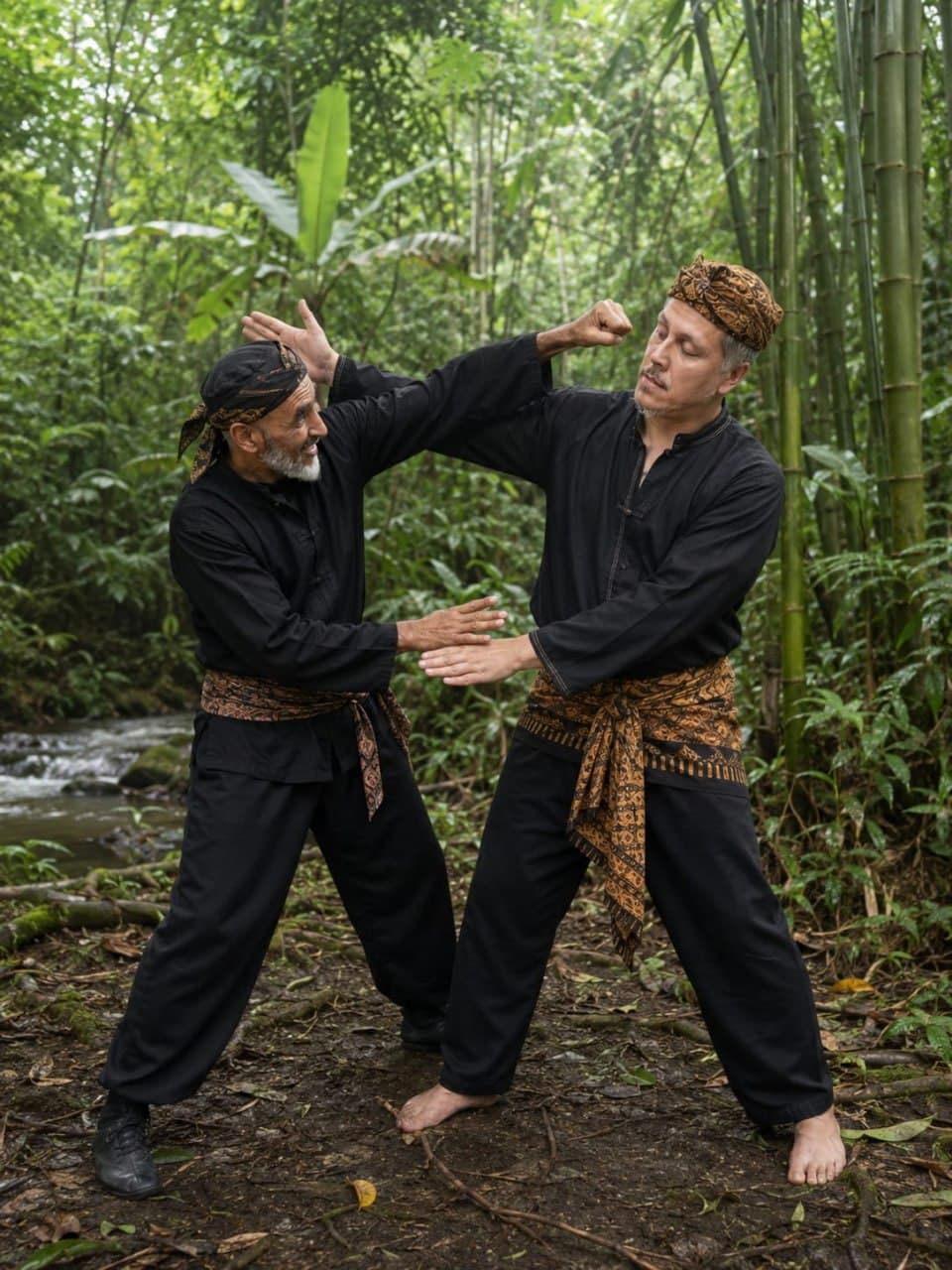
Traditional Silat Cimande Asli paired training showing close-range control and disciplined practice
Serious training is held together with sensitivity, control, and care.

To injure is easy. To heal requires higher knowledge.

The same tradition that studies structure, balance, joints, movement, and pressure also points toward a deeper respect for the human body.

This does not mean that martial training replaces modern medical care. Rather, it shows that Cimande carries a broader inheritance where martial practice, ethical discipline, spiritual conduct, and traditional healing knowledge belong to the same world of responsibility.

Structure and restoration

The practitioner learns that the body is not simply an object to overpower. It is something to understand.

This is one of the reasons Cimande has such depth. The art trains the hands, the posture, the steps, the breath, the manners, and the heart.

Why this art matters today

A Source Art for Seekers and Serious Martial Artists

In a world where martial arts are often reduced to sport, spectacle, online content, or commercial branding, Silat Cimande Asli Tarikolot offers something different.

For the seeker of traditional martial arts, it offers source, lineage, oath, etiquette, teacher-to-student transmission, and a living connection to West Java.

For the modern martial artist, it offers practical close-range self-defence, structure, entries, limb control, balance breaking, takedowns, weapons awareness, and disciplined training.

Silat Cimande Asli Tarikolot speaks to both: the seeker looking for a living traditional art, and the martial artist looking for practical close-range knowledge that has not been stripped of its ethics, culture, or depth.

Training and seminar enquiries

Training, Seminars, and Instructor Development

Master Abdur Rahman Blanchette teaches Silat Cimande Asli Tarikolot in the United Kingdom.

Training and seminar enquiries are welcome from sincere students, experienced martial artists, martial arts schools, private groups, community organisations, and appropriate national or international hosts.

National and international seminars are available where suitable. Instructor development is also available for suitable candidates who show the right attitude, commitment, training background, and respect for the art.

Please include enough information for the enquiry to be considered properly.

Email: seminars@silatcimandeasli.com
WhatsApp: +44 7535 725720

Include

  • Location
  • Organisation or group
  • Preferred dates
  • Expected participant numbers
  • Training background
  • Purpose of the enquiry
  • Whether the enquiry is for a seminar, regular training, or instructor development
Start an enquiry

Host a Silat Cimande Asli Tarikolot Seminar

Bring Traditional Pencak Silat from West Java to your group.

Bring traditional Pencak Silat from Tarikolot, West Java, to your school, group, or organisation. Seminars can be arranged for serious practitioners, martial arts schools, community groups, and suitable international hosts.

Make a seminar enquiry

Common questions

Silat Cimande Asli Tarikolot, Pencak Silat, Training, and Seminars

What is Silat Cimande Asli Tarikolot?

Silat Cimande Asli Tarikolot is a traditional Pencak Silat lineage from Tarikolot, West Java. It is a practical Indonesian martial art taught through direct teacher-to-student transmission, with emphasis on self-defence, etiquette, discipline, character, and respect for the source of the art.

Is Cimande a form of Pencak Silat?

Yes. Cimande is one of the recognised traditional streams of Pencak Silat from West Java. It is known for disciplined martial practice, close-range self-defence, strong hand methods, body structure, etiquette, and cultural depth.

Where does Silat Cimande Asli Tarikolot come from?

Silat Cimande Asli Tarikolot comes from the Cimande tradition of West Java, with specific reference to Tarikolot in the Caringin district of Bogor. Tarikolot represents source, village transmission, teacher authority, etiquette, and continuity.

Who teaches Silat Cimande Asli Tarikolot in the United Kingdom?

The public teaching in the United Kingdom is centred around Master Abdur Rahman Blanchette, also known as Nicholas Blanchette. His Silat Cimande Asli Tarikolot comes through training in Tarikolot and authorisation from Bapak Firdaus.

Is Silat Cimande Asli Tarikolot suitable for beginners?

Yes, sincere beginners may train. The art requires patience, humility, discipline, and respect. Beginners are introduced gradually to posture, movement, etiquette, jurus, langkah, partner training, and the foundations of self-defence.

Is this suitable for experienced martial artists?

Yes. Practitioners of Pencak Silat, Kali, Escrima, JKD, BJJ, Muay Thai, boxing, traditional martial arts, and modern self-defence systems may find Cimande especially valuable for close-range structure, entries, limb control, balance breaking, takedowns, and weapons awareness.

Is Silat Cimande Asli Tarikolot a sport martial art?

No. Silat Cimande Asli Tarikolot is a traditional self-defence art. It can complement sport training, but its logic is different. The emphasis is on practical movement, close-range control, judgement, restraint, etiquette, and protection.

How is Cimande different from modern combat sports?

Modern combat sports are excellent for pressure, timing, fitness, resistance, and testing. Cimande offers a different layer: source tradition, close-range self-defence, weapons awareness, limb control, body structure, entries, etiquette, and responsible use of skill.

Does Cimande include healing knowledge?

The Cimande name is traditionally associated in West Java not only with martial practice, but also with healing knowledge, massage, injury care, balur, oils, and bone-setting traditions. This wider inheritance is honoured as part of the cultural depth of the art. It is not presented as a substitute for modern medical care.

Do you offer Silat seminars in the UK and Europe?

Yes. Silat Cimande Asli Tarikolot welcomes appropriate seminar enquiries from the UK, Europe, and internationally. Enquiries are considered carefully according to location, group, purpose, participant numbers, and suitability.

Is instructor development available?

Instructor development is available for suitable candidates. It is not simply a certificate course. Candidates must show commitment, humility, training ability, respect for the art, and willingness to represent the lineage properly.
Traditional Indonesian Silat

Traditional Indonesian Silat from Tarikolot, West Java, taught in the United Kingdom by Master Abdur Rahman Blanchette.

United Kingdom based. National and international seminar enquiries welcome.